About Me

"Use every man after his desert, and who should 'scape whipping?"

Tuesday, 31 March 2026

Strange but true: many shoppers actually prefer self-checkout (and other weird reports from south London's retail frontline)

 Asda, Clapham Junction, on a busy Sunday afternoon, last week or any other time of year.

There's a huge queue of  mainly young people - the type who  used to be called yuppies but who might now be called gen Z-ers or whatever - waiting to use the self-check out tills. 

Most wearing sports kit of some sort or other, some clutching multi-packs of beer, energy drinks and crisps. Maybe hoping to get them home before some big match kicks off on tv.

Clutching my own haul of bananas, pitta bread, and a kilo of Lancashire Farm yogurt, I am  surprised and happy to find much shorter queues at the two or three remaining real check-outs, with a human being at the till. The further you walk from the exit, the shorter the queue. I am through in three minutes, and have a brief chat with the check-out person into the bargain.

If you think this was a freak inversion of normal experience, think again. Over the past year  I've benefitted from this phenomenon dozens of times. Not just in Asda, but all the supermarkets I ever use, even the Germans. 

Sainsburys on Clapham High Street is, at certain times of day, a reliable example. This medium-size supermarket is where two separate SW4 demographics meet but never coalesce. Well-off, youngish professionals rub shoulders with mainly less well-off residents of nearby social housing estates.

In the former group, the young men _– sports shorts and sporting that uniquely unattractive hairstyle of the moment – were joining an already  massive queue for the self-checkout tills. 

Perhaps they don't even realise that there are two or three human check-out tills at the back of the store. Here are much shorter queues, often old people (like me) who have an instinctive dislike of machines that tell you off.  Also people who for whatever reason don't have debit or credit cards let alone mobile phone payment apps.

Not saying these yuppie types are bad or unpleasant people - simply that their upbringing and London lifestyles seems to turn them against engaging with "others" (ie not their sort) in the flesh. Maybe some are scarred by Covid (but these are surely the ones who rarely even go out to shop, but stay home and  have everything, even a single bottle of Heinz Tomato ketchup, delivered to their door). 

This is perhaps a trivial example of a deeper, longer-term change in behaviour. Reluctance to even think of wasting time, and assuming that anything involving touch-screen technology is bound to be quicker and more efficient than the old ways. The terrible risk of becoming engaged in small talk with some grubby old man in the queue (that's me, obviosuly). Getting stuck behind the mum with a clutch of lively kids, who's having problems with her Nectar vouchers; being silently judged by others for your purchase of a twelve-pack of lager and those tubes of crisps (that's just my prejudice talking).

Or maybe it's just herd instinct - seeing a long queue of your type of people, and joining it.

Long may this phenomenon persist as it means other shoppers can enjoy a bit of human interaction and get throuhg more quickly.

But self-checkout continues to expand, with many smaller branches rarely having any staffed tills. The retailers prefer machines to people; they are so much cheaper. 

Another trend seems to subliminally encourage people to buy more.  Two or three of the shops I used to use have now got rid of nearly all the small baskets in favour of enlarged, deformed plastic baskets with wheels and handles.  

These new contraptions block aisles and other shoppers trip over them. They're just as annoying as the flotillas of wheeled suitcases that trundle across the departure zones of all big railway stations, airports, etc. 

But they're there, and everyone except me and a few other stubborn users of old-school baskets, have accepted them.

Reminder to self: you are just a relic of a bye-gone age. Don't worry about these things!

Context: First versions of this post were written soon after the covid lockdowns, when shoppers were still re-learning the rules of social interaction. Like the majority of stuff written for this blog, I didn't publish, thinking it too trivial and subjective, too much reeking of prejudice.

Ironically, the day I chose to put it out into the open air, large numbers of kids were dropping into supermarkets on Clapham High Street and avoiding all the check-outs, whether self or staffed. These end of term disturbances  on Saturday and Tuesday seemed to me like a bigger version of what happens on that stretch of the high street every school day at abut 4pm, when bunches of demob-happy kids crowd around bus-stops and the fast-food outlets. Similar surges have been seen all over London over recent years. 

The location - one of the most dismal High Streets in London – sees diferent but equally disturbing displays of anti-social behaviour every Friday and Saturday evening, when the ya-hoo stag and hen night crowds descend. It's  like a laboratory experiment for sociologists. That big shiny new M & S opposite Sainsburys is emblematic of the Clapham disease. The shop is for well-heeled young professionals with lots of cash but not much time. I wonder if that space had been taken over by Lidl instead of M & S, would we have seen such enthusiastic crowds of non-paying customers on Tuesday evening? 


Sunday, 22 March 2026

No, I don't have a "smart speaker" at home. And I never will, thanks very much.

What is the four-word sequence most often repeated across all BBC radio stations?

I don't have proof for this, but I'd say the phrase that has struck my eardrums more than any other over the past two years is, "ask your smart speaker..."

This message is repeated so regularly, and with such urgency, across so many stations (I've even heard versions of it on Radio 3 recently) that I can't help feeling someone at the BBC is on extremely good terms with some consumer electronics suppliers.

Why else would they be urging us to use these mysterious products? Surely if we're already listening to BBC local radio, Radio 4, or whatever, you don't need a "smart" anything to find it again? My sad experiences with other "smart" technology (ie, phones) suggests the clever speaker would almost certainly serve up the wrong channel and refuse to find what I really wanted.

I do remember, well over a decade ago, being invited round to drinks with some former neighbours who wanted to show off their latest gadget - a sound system with "Alexa", an early version of this smart speaker craze. The entertainment we would have asking Alexa to find some obscure piece of music, then crying with laughter at the unlikely alternatives it played for us, lasted for roughly the first bottle of wine. And that was it. 

I could not then imagine that, all these years later, I would be driven mad being urged, every half hour or so,  to ask one of these devices to find one of three stations I listen to most often. 

I might of course ask it to find me the most recent edition of Point of View featuring a favourite such as Will Self or A L Kennedy. Would it tell me the BBC scrapped this gem of a programme over a year ago? Never has ten minutes of radio airtime been more intelligently used than in many of those broadcasts. I suppose the speaker would just send me to the well-stocked BBC Sounds archive. But it ain't the same....

Oh well, just another topic for endless grouchiness in this and other outlets. Further miserabilist rants are in the pipeline.

Meanwhile, no. I don't have a smart speaker, and I am determined never to have one.

This post was written in spring 2023, when these blatant plugs for "smart speakers" were already annoying interruptions to listening on some BBC radio stations. One of the main culprits was BBC Radio London, but it's clear the same promos are playing out on local radio all round the UK. 

No doubt the BBC feels it has to promote itself this way because so many more people are using these voice-activated audio devices. Alongside this, more BBC radio content is being re-packaged as "podcasts" for BBC Sounds online.

Has anyone noticed how some presenters are now poking gentle fun at smart speakers?

That's just one of many things I love about the crazy BBC.


Thursday, 5 September 2024

A new demographic marker - when Lime bikes descend like swarms of locusts


 Lime bikes are getting people's backs up in all parts of town, mainly for being thoughtlessly dumped on narrow pavements, blocking entrances, 

Here we're generally pro-bike, so it seems a shame to come down on these rental contraptions. But, apart from being a blot on the landscape (a grim achievement, given the beauty of a simple bicycle) and sometimes being ridden by dangerously careless or clueless individuals, these bikes are also a particular menace for other cyclists all over town.

For example, the racks for normal cycles outside most tube and rail stations in the most yuppified parts of London. (Sticking with the word yuppy for its perfect associations with young "professional" incomers to London, with plenty of money but little interest in the communities they barge into. The current use of Gen Z or X or Millennials seems ageist, too vague and too generalised).

You couldn't get more neo-yuppy than Clapham South, and that's where, at certain times, you'll see huge clusters of rental bikes around the station entrance. Trouble is those bikes are very heavy and very difficult to lug around, especially as they're locked/immobilised until you rent one. So you have to hunt for accessible bike parking.

Ironic to see full racks of Santander bikes about 30 yards down the road. 

I've never seen such a profusion of green, black and white plastic in other parts of town, but all around here they appear suddenly at some puzzling location, maybe near a new shop or café, where they're dumped and I suppose forgotten until the Lime collector does its rounds, if there is such a thing?

I've never tried one of these, mainly because they require use of a smartphone (I think).  I've tried Boris bikes and their equivalents in other European cities, and was generally impressed with their robustness and simplicity. But these were not electric-assisted and thus lighter (but still heavy by my standards).

As for Lime and their rivals, well it seems their time could be up. They are so dangerous for so many reasons. Brent Council is likely to be first to ban them unless they promise to provide designated parking places. But that would be very expensive to provide and also reduce their attractiveness to lazier commuters.

Only recently realised that the people taking phone snaps of these bikes are probably not bike-spotters but are taking them as evidence of where they dropped the thing. Oh, how very 2024, yee-euch.


Thursday, 18 July 2024

*Why, why, why...why are we sleeping?


So why quote this line from the 1968 Soft Machine track?

The lyric was typical of its time, a lysergic bad dream, intoned in Kevin Ayers' dark chocolate voice. But that insistent chorus, which builds in urgency through the song, has been ringing in my ears all the time recently. 

Why is no-one apparently awake to the havoc that these orgies of fossil fuel-burning is causing?

The final straw for me was reading a piece in the ailing London Evening Standard (that reliable source of blood-pressure-popping entitled people's waffle) by the sister of former PM Boris, that is Rachel Johnson. 

It's a typically breezy 600 words or so on how much she's hating our non-existent summer and oh, if only she could blame someone for it.

You could dismiss it as just another inconsequential filler if it wasn't (a) on the main comment page of this august publication and (b) so annoyingly missing the glaringly obvious answers. She asks this question, time after time: "I can't think who to blame for this summer. Who to sue".

Is she being deliberately disingenuous? I mean, sue the manufactuers of gas-guzzling SUVs for a start. The ones I see ferrying Wimbledon tennis stars and VIPs around traffic clogged SW London, by the way.

Well, we really ask you, Rachel. Because you really do know.  We're all to blame. Have you not heard of the climate crisis, of the tilting of the Atlantic jetsream, of our being condemned wet, windy summers (and springs, etc) while most of the planet burns or drowns? We need to sue - ie tax - ourselves, and spend all the money on alternative energy sources.

As if to underscore our collective gormlessness, news had just been released showing higher than expected IC car sales last year and a return to almost pre-covid levels of  tourist air traffic.

How can we thus be surprised when we shiver through the spirng and summer months, and are buffeted by endless Atlantic storms. 

Maybe you only notice when cycling through a city like London, negotiating apppaling congestion, inching the narrow bike between very wide and shiny SUVs. Despite many electric vehicles, the air is heavy with the stench of cars, the extremely hot exhalations of their AC, mixed up with burning chip fat from costcutter delivery vans.

All of this, even into the ULEZ and congestion-charge zones. And, it's even worse in the traffic jams of outer London.

It's just a small example of how the West remains in denial of the mess it has created on this planet. The West, all the former imperialist European states, the UK above all, North America, Australasia. We no longer seem to want to know about the onoging climate disaster, largely caused by our greedy consumption of all the wealth we could dig out of our earth, and the earth of the colonised regions.

We'd rather sleep now. Who wouldn't? 

Maybe I should be more charitable toward Rachel Johnson? I mean, there's a place for frothy, amusing writing in the most austere publications. She probably tossed that piece off in a few minutes, and you never know what the subs will pick out for a headline. But no, she's no starving hackette, no unpaid intern or desperate freelancer. And this piece really wasn't at all funny.

The Evening Standard is said to be in its last few weeks as a daily newspaper. One of the main causes of its decline is said to be the provision of wi-fi on London's underground network, so that commuters can get all the news & entertainment they require via their cursed i-Phones. It's true you now see unclaimed stacks of the freesheets at every tube station.

Like almost every other printed form of news, the Standard  has long been the plaything of billionaire owners. Perhaps this is not all bad. At least there'll be less need for unsustainable forestry methods to produce so much newsprint. 

* Why Are We Sleeping first appeared on Soft Machine's first LP ("The Soft MAchine") released in 1968. The writing credits are to Kevin Ayers, Mike Ratledge and Robert Wyatt

Here's a YouTube link: Soft Machine _ Why Are We Sleeping?

And here are the lyrics:

It begins with a blessing, it ends with a curse
Making life easy by making it worse
"My mask is my master", the trumpeter weeps
But his voice is so weak, as he speaks from his sleep

Saying: "Why, why, why...
Why are we sleeping?"

People are watching, people who stare
Waiting for something that's already there
"Tomorrow I'll find it", the trumpeter screams
And remembers he's hungry, and drowns in his dreams

Saying: "Why, why, why...
Why are we sleeping?"
"Why, why, why...
Why are we sleeping?"

My head is a nightclub with glasses and wine
The customers dancing or just making time
While Daevid is cursing, the customers scream
Now everyone's shouting, "Get out of my dream!"
Saying: "Why, why, why...
Why are we sleeping?"

It begins with a blessing, it ends with a curse
Making life easy by making it worse
"My mask is my master", the trumpeter weeps
But his voice is so weak, as he speaks from his sleep

Saying: "Why, why, why...
Why are we sleeping?"

Editor's Non-Apology:

Given that this blog was originally supposed to be about music on vinyl, cassette, etc, I thought the use of this 56-year-old song was allowable. In fact, maybe this lyric is not so unrelated to the story. Thus, "making life easy by making it worse"....hm, isn't that exactly what we've been doing for too long? If I find any other old or new song titles that seem to fit blog posts, I'll use them!


Monday, 22 April 2024

Dear Paris, please would you lend us your mayor for a few years?

Having banned traffic from the north bank of the Seine, and reduced the scourge of SUVs in the
centre,  Anne Hidalgo, mayor of Paris, enjoys a ride in the city she has made safer for cyclists and pedestrians


Less than two weeks to the London mayoral election and the gap between incumbent Sadiq Khan and Tory candidate Susan Hall is shrinking. Given Hall's murky record, it's shocking to think she might grasp control of one of the world's most ethnically diverse cities. 

A booklet - "My vote doesn't count" - arrived by post the other day. It's the GLA's official primer on the election, complete with self-penned blurbs by those Mayoral candidates willing to stump up the £10,000 fee. 

That money buys them two pages and the right to say whatever they like, so long as it's legal. 

Eleven of the 13 candidates decided to avail themselves of this free speech opportunity. Sadly there's no statement from Count Binface (was hoping they might offer a solution to London's renegade wheelie bins). 

All but one of the 11 live up to lowest expectations. Overall, it's a dismal read, occasionally stomach-churning (see: Reform UK and Britain First's entries). The good guys (ie Sadiq) play bland and safe, seeming to lack all conviction,  while the baddies - well they're hardly full of Yeats' "passionate intesity", but they don't mince their words either. 

The only candidate who has anything new to say is Femy Amin, of the Animal Welfare Party. She wants to make London "the global leader in opposing speciesism". Good luck to her! Can't help thinking it might be a good idea for her to join forces with the Green Party.

Of all London's many problems, the most polarising one is private car use, with the Tories and several others hoping to gain votes by promising to ban the ULEZ in outer London boroughs as well as the LTNs.

Although he's hardly shouting about it, Sadiq is the only one determined to stick with  ULEZ. Even the Greens and Lib Dems are non-commital on this issue. 

Much as his commitment to cleaner air is to be admired, I do feel Mayor Khan needs a break. The poor guy, the only politician in the country to do anything concrete about the 21st century's most critical problem, is the target of the vilest abuse. Even the leadership of his own party, who should be mightily proud of his achievements, always hold back on giving him their full support. The achievements are remarkable considering the outright hostility of car-loving Rishi Sunak's government.

Sadiq deserves a real holiday, and London needs new ideas and more urgent action to tackle our deteriorating urban environment, increasingly blighted by private cars of ludicrously expanding proportions,  plus all those Ubers, delivery vans, construction trucks, and supercars that should be confined to racetracks..

Where to turn? Well, in a dream world, just a two hour  Eurostar ride to Paris, a city which has just announced that more of its residnets now go to work by bicycle than by car. The statisitc is largely to the credit of its mayor, Anne Hidalgo, and her mission to make her beautiful city an even more delightful place for human beings to live, work and play in.

Mayor Hidalgo is that rare thing – a politician with ideas, who makes them happen, and takes enough of her electorate with her. Now in her second term, having already achieved the miracle of pedestrianising the riverside motorway through central Paris, she has just administered a sharp prod to the fat flanks of SUVs.

A close win in a referendum earlier this year  means owners of the biggest,  heaviest private cars, ie SUVs,  have to pay three times as much to park in central Paris.

Just imagine the uproar of the British media if Sadiq Khan had even breathed of a plan to do this - let alone succeeded in implementing it!

Imagine the convoys of morbidly obese leather-padded vehicles lumbering in protest to the strategic points of the South and North Circulars, their deathly-white always on LED headlights glaring like the eyes of a nightmare psycho-killer.

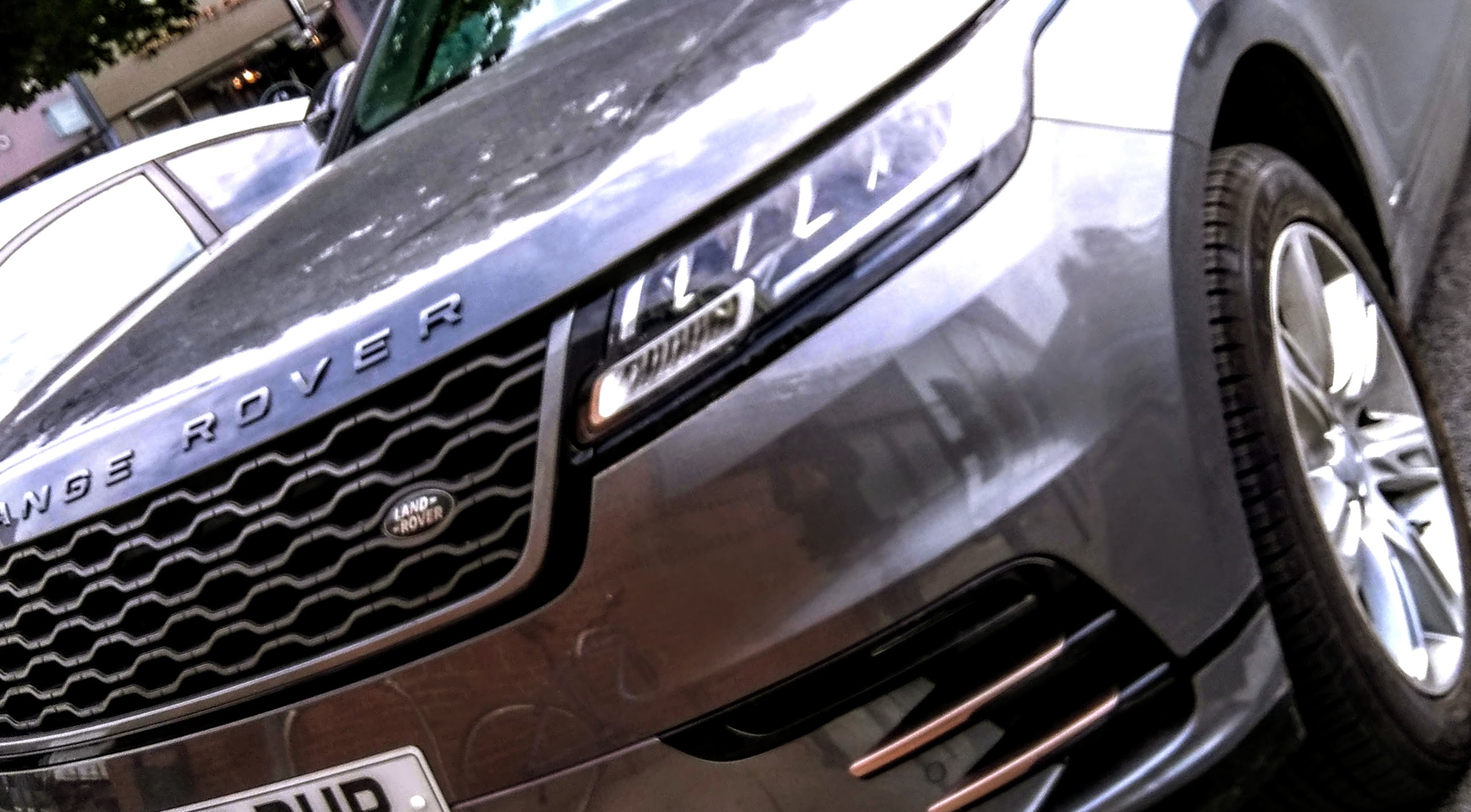
That sounds too vile a prospect to envision - except that we see it every day anyway, as these four-wheel fatties dominate the congested, narrow, potholed streets of this messed-up city. Encountering one of these vehicles charging straight at you on a residential street is as grim as seeing a cruise liner blotting out your views of Venice. Howl's Moving Castle had nothing on a top-of-range Range Rover in full flight, its death-ray lights sucking the life out of anyone caught in their beam.

Now in her second six-year term, Mme Hidalgo came early to the realisation that automobiles are among the greatest enemies of human wellbeing in urban settings. It maybe too late to make any difference to the downward spiral of climate change. She might not save the planet but at least she'll make the final decades of life in her city safer and more enjoyable for those not addicted to huge luxury vehicles.

Of course Mme Hidalgo has powerful opponents. As with our embattled London mayor, most of the active opposition comes from the suburbs well outside the city.

And that's where she has a great advantage over Mr Khan. She doesn't need to give a fig for these suburbs. Her electorate resides entirely inside the relatively small Paris commune area, the 20 arrondisements. She does not have to win over the commuting classes and small business white van folk outside this golden circle, living in the various self-governing departments of the Ile de France region.

She also has more power than the London Mayor. Like Khan, she's a Socialist, but her party does not undermine her in the way that the current Labour regime has been so iffy about Sadiq.

And while she has a famously spiky relationship with France's President Macron, the national government doesn't interfere in her business as much as Sunak's lot do with Sadiq Khan. 

None if which is to belittle Mme Hidalgo's achievements: the Parisian electorate is famously argumentative and sceptical.  However they are also famous for having good taste, intelligence and a propensity for making decisions based on reason.

There was no shortage of information to support Mme Hidalgo's policy to penalise SUVs, and those detailed statistics were available to all. The website of Le Monde provides rapid access to a panoply of statistical research on the impact of SUVs on the urban environment.

To me one of the most compelling findings was the vast amount of limited public space taken up by autombiles at any given moment - whether static in parking lots or parked on streets, or moving through the traffic-clogged boulevards. 

There are also detailed statistics on the inexorably rising weight and size of private cars in the city in the past two decades. Heavier vehicles (with the biggest SUVs now topping two tonnes) not only create more pollution - from tyres and brakes as well as the engine - but also damage roads and cause worse injuries in accidents. Their bulk reduces sightlines of other motorists, cyclists and pedestrians.

Oh, and by the way, as I've been saying on this blog ad nauseam, SUVs are a vile blot on any urban streetscape. They're so big and brash: the lumpy, macho and often aggressive styling acts on us all, even subliminally. 

So, yes, please let us have a dash of the Hidalgo spirit. Surely we could borrow football practice, where premier league clubs will loan one of their senior players to lesser teams for a few matches? 

Failing that at least give her the Mayoral equivalent of a state visit: a tour, on bicycles obviously, of London's many notorious traffic whirlpools. I'd nominate the Battersea Park roundabout for a start: an object lesson in how not to use cycle lanes, and in how to confuse and annoy motorists, cyclists and pedestrians equally.


Saturday, 10 February 2024

Rest in peace, Damo - your sound carries on, you crazy sound carrier

I love this quote of Damo's on the back cover of 
the memoir published in 2023 - but I'd also like to
slightly disagree. Damo belonged everywhere, and
everywhere he went belonged to him!
Don't worry. I'm not reviving this moribund blog. But not giving it a coup de grace either.

Just have to add at least one more post,  to remind all about that mysterious electric disruptive delightful soul Damo Suzuki who died yesterday aged 74.

When I think of Damo I think first of all the sound he caused to be created and to hum and sing around the planet. His own version of the never-ending tour, the Sound Carrier network - hopping across oceans and continents non-stop more or less since he left Can, 50 plus years ago. 

He met music-makers and sound carriers in big cities, small towns, remote villages, the network kept on swelling and vibrating and humming, and it all somehow seemed to be infused with Damo's cosmic sense of music - whatever music is - and I find it hard to separate that from the smile on his face as he made or listened or contributed to these sounds.

Last time I saw him was at Rough Trade East in London, what three or four years ago: and I curse myself for missing him on many other occasions at easy to reach locations. On that evening, where he was talking about his days on the publication of his sort-of autobiography - titled, in a wry tribute to Mark E Smith - "I Am Damo Suzuki".

MES had of course written a song of the same name, a typically oblique bit of musical fanmail to be found on The Fall lp This Nation's Saving Grace.

Smith had died  the year before, and in a wonderfully strange tribute Damo, visiting Manchester a few months after his demise, met up with the last members of The Fall for a cheeky photo-opportunity: "I Am Mark E Smith". Only because it was Damo and the final iteration of the Salford phenomenon, could they get away with it, knowing MES would have loved it.

This delightful story is one of hundreds told in this marvellous book, which includes loads of autobiographical fragments woven into a series of in-depth interviews wwith some of the hundreds of musician and others he performed with, influenced, loved and in some cases fell out with. His joint author, Paul Woods, does a brilliant job both in the interviews and stitching thr whole thing together to make a very readable book, whether straight through or through infinite dippings-into. 

As well as assembling all those irresistible lists, discographies, and some truly priceless photos. There are also some examples of Damo's weird and cheerful artworks.

Paying tribute to a tribute: Damo Suzuki slips into the gap
 left by the Fall's founder Mark E Smith, who died in Feb 2018,
three months before this photo was taken. Damo is surrounded
by the members of the final iteration of the ever-changing band. 
Photo @ Michelle Heighway, from her documentary about
Damo's Network,  ENERGY following Damo Suzuki's
 Network over 7 years
.

If you don't have this book, get a copy asap. It's available at £16.99 from publishers Omnibus Press.

That evening at Rough Trade, when Damo answered questions about his life and work, and also spoke a bit about his illnesses (which had been extremely serious, as described in gruelling detail in the book) turned out to be one of his last appearances in the Uk. 

He had recovered from the cancer which had returned decades after a first bout, but sadly it turned out this remission was only temporary. 

That night you could see he was clearly feeling the reduction in energy that such suffering have on the toughest of souls. But it did not stop him crossing the planet, carrying with him some sort of burning magical musical energy which infected, inspired so many others young, old, every type.

Thanks Damo, we love you still!


Getting the hump over speed bumps, and other stories

Here we go again. Your 40-year-old pushbike and the 71-year-old lump of fat, bone and gristle pedalling it like mad (aka me) almost take off as we hit one of those stupid mini-speed-bumps on Silverthorne Road, at what for us is quite a decent speed.

If you think the idea of having two bumps, one in each lane, is to spare cyclists from the often quite dangerous jarring they get from these escarpments in nearly every residential street in inner London, think again.

No, it's more to allow ambulances and cop cars a smooth passage if they're having to proceed at high speed. Trouble is every other driver also knows they can give their fabulously fast and manoeuverable vehicles a quick flick around these obstacles, meaning anyone on two wheels has to be very watchful as said cars swerve into their paths.

But should we abolish speed humps? Of course not. They're absolutely essential to protect the lives and limbs of those foolish enough to be traversing these rights of way on foot or in pram or pushchair, wheelchair, scooter, bicycle or tricycle.

What rankles is that the bumps are ONLY necessary because drivers are too arrogant,  too infantile and too selfish to stick to the legal speed limits. 

Also, it's apparent some cars are now able to zoom over a whole series of the humps without wallowing at all. Maybe makers have tinkered with suspension to enable this? It's certainly not true for long low sports cars and boy racers: there's so often a delightful scrunching sound as they nose-dive into the tarmac, scraping their soft and expensive bellies on the hard stuff.

Many of these bumps are steep enough to launch the unwary cyclist into unexpected aerial acrobatics. They are just a pain in the arse for other road users, but they are positively dangerous for us. 

They also result in many drivers choosing the few roads kept free of speed bumps for the sake of emergency service vehicles. Trouble is I live on such a road and notice that barely a single private car adheres to the 20mph limits. A majority seem to exceed that by a factor of two; some three; and some even four.

So, what about using all this digital surveillance stuff to do some good road safety work?


Here's the boring rest of menu stuff:

1. Corsodyl tooothpaste.  Used to buy this as was only one that seemed to be unsweetened. Now they sell the "Original" with a "new improved taste". Well, if it has a new flavour it cannot any longer be the original. And the "improvement" turns out to be a noticeably sweeter and therefore to me quite disgusting new paste. Why do they force-feed sweetness, whether from sugars or synthetics, onto the British consumer? Obvious: profit for sugar companies, sweetener manufacturers, and the extortionate dentists who will later be dealing with the literal fall-out.

2. BBC radio trails: Still love the BBC for all its failings, but the noisy trails between almost every programme drive some of us mad. So often they seem to involve shouty sportspeople. Surely they know not all listeners to Radio 4 or 3  or even local stations are fans of such stuff? It's also odd that promotional stuff on BBC TV is so much more careful and sometimes even delightful, though even here we see the gradual invasion of Hollywood-style sound editors. And most of the promotional trails and jngles on local radio - even Radio London - are downright embarrassing. You can feel some of the more grown-up presenters wincing as they have to punctuate their sometimes very good programmes with these inane interruptions.

3. Beep beep! Drivers' ever-increasing willingness to blast everyone else (but especially cyclists) with their ridiculously powerful air-horns or hooters. This has been covered in painful length in earlier posts on this site, passim.

4. Idiot wind - the petrol-driven leaf-blower: A curse and a menace that is still rising as more of the recently-created gated private residential developments are completed. The racket of a Monday morning is unbearable. Often as not it's a bloke chasing two or three leaves around a small patch of expensive paving slabs, the turning and parking area of a new block of luxury apartments (which should by law have remained as grass and trees, but never does in this strange inner-London borough.) Electric versions are available: why not make the two-stroke stinkers illegal?

5. Flying ants in sporty pants: The visual pollution of the first sunny days of spring, when the male yuppies strip down to shorts, flip-flops etc and cover the local parks like pale maggots on rotting meat. Actually, since Covid they seem to have been wearing those shorts all year round, along with white trainers, white socks and and padded  gilets over sporty shirts - de rigeur gear for non-office days it seems. They go with the brutal squaddie-style half-scalp-razorings which might look good on a Brazilian footballer but not so hot on a pale pink City boy.

6. It used to be small is beautiful. That's all gone. Now, big is always better in Obese Britain. Another example - it's getting hard to find normal-sized baskets, notably in budget supermarkets Lidl and Aldi. They seem to be replacing them with dumper-sized baskets on wheels, with a little handle so shoppers can trundle them around the crowded aisles like all those ghastly wheelie-bin suitcases at Gatwick. These bigger baskets are worse than the massive trolleys, which are at least properly manoeuverable. They block aisles, trip other shoppers up, and generally make the shopping experience even more miserable than it needs to be.

Amen.


Thursday, 1 September 2022

Reserving the right to be angry about most things (alternative headline: Clapham SUV deflations - it wasn't me but I wish it had been)

Yeah sorry it's just a basic Range Rover again, there's many bigger, uglier more repulsive and offensive SUVs out there I know (I mean the latest generation of AUDIs and Volvos and Porsches and Mercs and Beemers are just so provocatively hideous in their absurd, elephantine bulk - but I can't face looking at them long enough to take or edit a photo)


Have just lost the 89th of my 90 cat's lives as a geriatric cyclist in London. Alive but shaken, I'm in no mood to cheer top govt ass Grant Shapps on his latest anti-bicycle musings. Nor will I shed a tear for the people who insist on driving bus-sized cars (SUVs) around the cramped streets of London, when some activists let their fat tyres down.

Last week it was a saloon car taking chance to turn right off Lavender Hill, seeing no oncoming vehicles, not seeing oncoming old git on 1978 biciclette. 

It was one of those moments when you know you're going to die if you don't pedal just that bit extra hard to get your self out of the way of this  jet-propelled BMW's surging arc across the carriageway. Driver notices me too late, but I hit the pedals just hard enough to be merely buffetted by the slipstream  of this metallic behemoth. Like crossing the wake of a billionaire superyacht in the Solent.

(Mental note to self: well done, you've learned the lesson from the time this happened, on the same road, in 2006. That time you squeezed the brakes with all your strength and still hit the car which wasn't aware of you until your nose splattered onto the windscreen, right in front of the surprised chap driving it. Ambulance and cops and so on, 3 months to recover.)

So, this time I get off lightly. As usual I raise fingers behind back and keep going as fast as possible, fully expecting said motorist to have taken offence and decided to off me in a street fight.

This was third time in recent weeks that a cat's whisker has separated rider from being not just a bag of bones but a bag of broken bones and crushed innards.

And yet the bliss of cycling home on these warm days, after maybe six to 10 hours standing or sitting around for money, seems more than worth all the risks.

In truth risks to life and limb come as often from other cyclists and even more often from stealth-bomber electric scooterists.

So many old and new reasons to be angry; nothing clears the snot-stuffed soul more quickly than an adrenaline rush followed by a wallowing in a hot tub of justified anger. 

Yes it's absurd. It's got to the point where other people's anger (say about loud music on the SW4 Common) makes me angry.

But I reserve the right to be angry about most things as long as I express this anger safely and with good humour. Laugh after you curse them, smile a string of expletives. How many times has someone yelled, in best south London fashion, "faarkin' karnt!!" out of the window of their vehicle. It's usually either a battered white delivery van, or a high-end SUV. Back in the 70s it was often a Jag Mk 10.

So, didn't even try to suppress huge grin when the story of London's deflated SUVs made the evening news. Turned out it was a branch of Extinction Rebellion doing this at first, who are now more often calling themselves the Tyre Extinguishers. 

It started in London and Edinburgh and other cities with pockets of arrogant wealth, and has now spread across the UK. In Edinburgh a local cycling forum says the problem of oversized private vehicles hogging street space is just as bad as in London (see: http://citycyclingedinburgh.info/bbpress/topic.php?id=20914 )

When it started, this deflationary movement targetted Clapham once or twice - but it has not reduced the popularity of SUVs. Some streets, such as Orlando Road, have absurd numbers of the newest and biggest and shiniest SUVs.

Seems the activists, in true ER style, are adding wit and ingenuity to their direct action. The tyres are being slowly deflated by inserting a lentil or similar small legume under the valve cap, then screwing it back down to gradually release the air.

There's also an explanatory leaflet stuck under the wipers of all targetted vehicles. All of which   you can be sure will merely increase the rage of the SUV owners as they attempt to head off next mroning.

I'm aware that this tactic is a blunt weapon. There may be people with reasons for owning such a thing in a congested urban setting. They may have no choice. But the opposing reasons can't be dismissed. These vehicles are just too big for London's 18-19th century roads. They ooze over parking bays all over zones 2 and 3. They steal space and light as well as fill your face with fumes of various brake linings and fat-tyre compounds.

At least tax them more heavily, for god's sake - even after 40 degrees day, no politician seems to be capable of acting swiftly and decisively to kill the causes. 


Monday, 20 June 2022

Oh come on, please, isn't it time to take those jubilee flags down?


There's a street in Clapham - let's call it The Chase, as that's what it's called - which looks like it has fallen into the hands of extreme royalists. 

At every opportunity -  jubilee, royal wedding, or whatever - these loyal residents organise a street party. Judging from the leaflets circulated for the 2022 event, it was primarily for better-off residents only. Apparently it was a ticketed event, £20 per pop.

For non-royalist residents, this has all become an embarrassment - especially as the organisers like to put plaques on their walls to commemorate the events. One is reminiscent of the revered London Blue Plaque - which somehow devalues those genuine and well-deserved plaques up at the north end of this same street. 


In the past, however, the evidence of these orgies of adoration for the old firm of Windsor would quickly disappear.

This year they went all out for the four-day jubilee, and then some. As usual, huge Union Jacks were strung up across the full width of the road at roof-height - as though this were The Mall, and not just another overpriced south London rat-run. 

Actually the better comparison is Oxford Street, and an even better one, King's Road. All three streets are awash with money and short on taste; their sponsored displays are equally tacky.

Well, OK, for four days you could keep your head down and think republican thoughts as you walked past: or better still take a different route.

But, as if that absurdly prolonged "holiday" were not enough, the massive flags are still there, two  weeks after end of the celebrations. Some of the biggest houses still display tattered bunting and more flags - always union jacks, no other nations getting a look-in.

Worse still, much of bunting was sponsored by an estate agent. The cheapskates! Is not this the height of

Can you believe it? In one of the richest streets in
the rich postcode SW4, they stooped to using
sponsored bunting for the Jubilee party...

vulgarity? But at least it means only one in three of the triangles is a  Union Jack, the rest being PR for the company.

But honestly, how tacky can you get? As one former royal from the 1980s might have quipped, it was all terribly "naff". 

Did I miss something? I thought this street was in the London Borough of Lambeth, and not in some ancient royal borough, all of its own. 

The jubilee week did at least provide an experiment in socio-political prejudices, or demographic stereotypicality. 

Walking around the area, it was interesting to see where the most flags and bunting were. The Chase was the brashest show noticed on a trek from Lavender Hill to Ferndale Road. There were several smaller street parties, though oddly nothing at all in Macaulay road, which is if anything even wealthier than The Chase, in places. Seems the super-duper-rich are more discreet, or more probably celebrating their own wealth somewhere a long way away.

Turret Grove came closest to matching the scale of this street, though its use of multicoloured bunting, pride rainbows and flags of about ten nationalities, seemed far friendlier and more imaginative.  The UK flag seems less grim alongside Spanish, Italian, Jamaican, Scottish, Welsh, German, French, and other national colours. But when it's nothing but the red, white and blue, those of us who associate the flag with the bad old days of the National Front, the BNP, football thuggery, and toxic unionism in Northern Ireland, or toxic Britishness in the colonies, can only shudder. Echoes of Empire are to the fore. 

What for a while was good about Britishness was its post-war reluctance to make too much of a show. Maybe that was also a symbol of war fatigue, or perhaps imperial smugness - you know, we're top dogs so we don't need to wave our flags around. Of course that's all long since gone, and the far right are now more likely to cluster around the St George's flag, it seems. 

Well, the flags remain flapping as I write. Really, do we have to have these constant reminders of the sadly very disunited kingdom we now inhabit, in these sad, shambolic post-Brexit years of widening wealth gap and deepening misery?

* Update July 9 2022: Happy to report the flags came down about a week ago, so they had their full month of loyalist display. Quite surprised to see how many flags are still flying around London - notably in the above mentioned King's Road, Chelsea, where they seem almost a permanent fixture. Maybe they think they hark back to the early stage of 1960s "swinging London", when the flag had a year or two as a mod style icon.


Sunday, 12 June 2022

Mescalin, Morris and the horrors of contemporary car design: charity shop synchronicity scores again

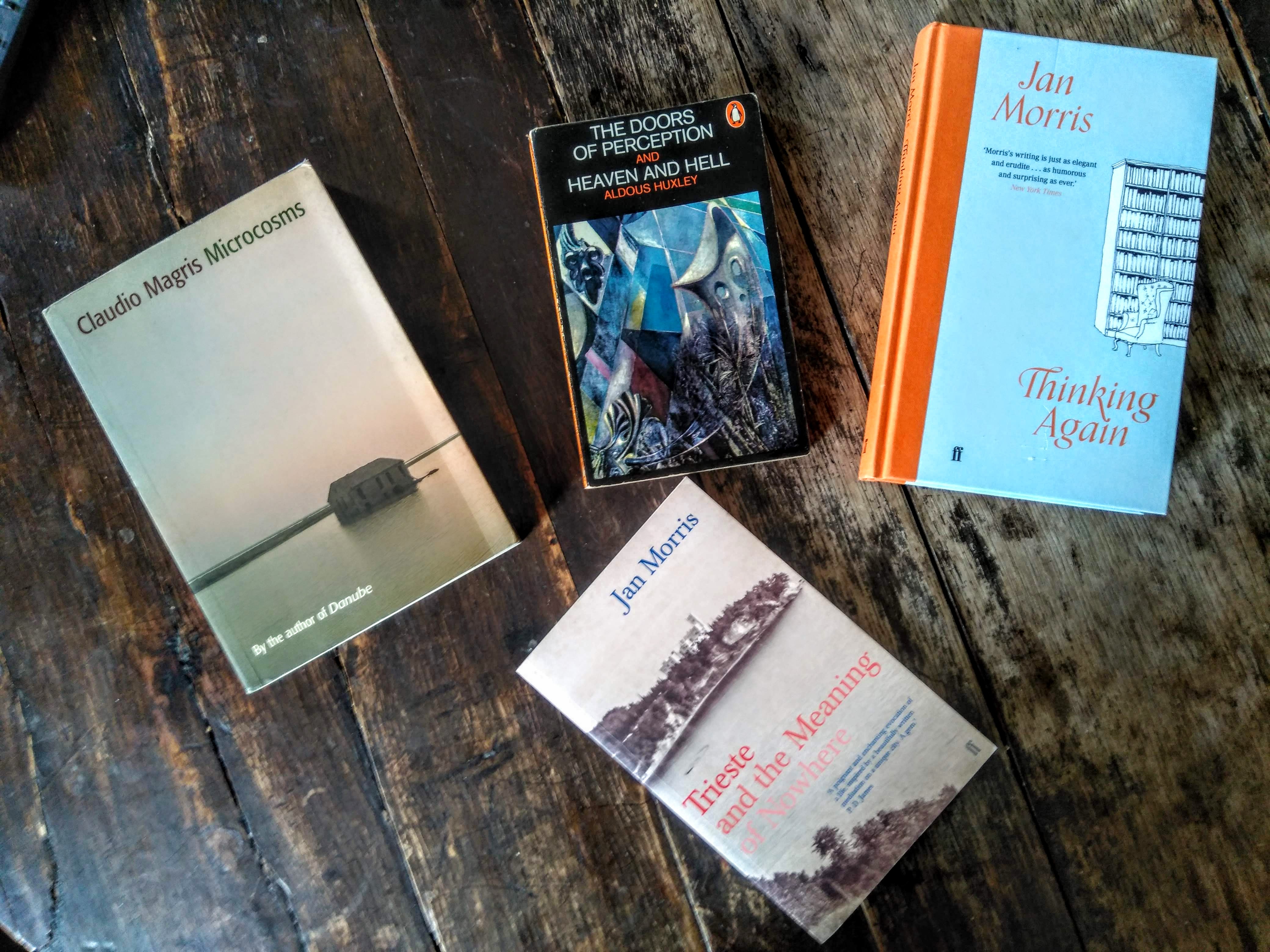
How these four recent charity shop finds led to yet another post on the awfulness of contemporary automobile design

Who can fail to like Jan Morris, the travel writer and novelist?  Jan - James before a sex change in the 1970s - Morris was a charming and witty writer who maintained a prolific literary career up to her death, aged 94, in 2020.

Some of us came to her a bit late and with trepidation. Recently, after enjoying a book about Trieste by resident sage Claudio Magris, I stumbled across Jan's late work on the same city, The Meaning of Nowhere, in a local charity shop. 

This (by the way) was just one of many recent examples of charity shop synchronicity which this blog has been covering - in myriad unpublished posts - ever since it started.

This book is a breeze, a delight. Morris's relaxed style draws you in, and before long you've read the book, enjoyed her literary hospitality. She shares interesting locations and historical anecdote, serves up plenty of salty gossip, and then you're sated and the book's finished. It's a great read, as much about Morris as the city: an "allegory of limbo". 

 As she aged the style became more chatty and less sharp. I found one of her last published titles, Thinking Again, a collection of daily musings covering the year 2018, in another charity shop. 

The first dozen entries are funny and interesting. I particularly liked day 5 - "...when I re-read it the entry turned out to be so footling that I have expunged it with a muttered curse". I like that: most of my writing is far too footling to share, as I keep telling you.

Getting the balance between frothy and serious is hard, and Morris generally gets it right. She's great on the frustrations of old age, and her confessions are endearing. As on Day 12,  when she admits a fondness for BMW cars and that she likes to drive like a boy-racer.

No surprise there: Morris always had a gung-ho side, as in that first great scoop on the climbing of Everest, when an ambitious young journalist on The Times.

It's good to have expectations overturned. But when Jan, still on Day 12, parks alongside a lot of  daytripper vehicles on her local Welsh seafront, she looks around and says: "This, I think, is a good period for external automobile design. Most of these machines look elegant and discreet". 

Well,  I almost choked on my muesli.

Can she really be saying this? What sort of cars do they have in North Wales? New cars that are "elegant and discreet"? Surely not the bloated, gurning chariots of toxic masculinity that are so popular in London's wannabe posh suburbs (SW4 in particular). 

OK, I am obsessed with the current state of car design. Believe manufacturers have been fanning the flames of toxic car culture by making their products look ever more aggressive, pugnacious. 

Look at their pumped-up bodies. Muscle-buggies who spend too long in the car-gym. The crude grilles that leer at pedestrians and cyclists and other drivers, as if to say:"I could crush you, little worm". 

Most have absurdly loud horns, tuned to frequencies seemingly chosen by experts in auditory torture.

All these things have been repeated ad nauseam in this blog. Unfortunately, the trend continues, and the cases of death by dangerous driving, often involving these over-powered monsters, carry on rising. 

Well, I can't blame Jan Morris, but it does seem an odd statement, and it also reminded me of another sychronous connection. I recenty found a beautiful 1960s Penguin edition of Aldous Huxeley's Doors of Perception and Heaven and Hell - two essays on the writer's experiences of psychedelic drugs, the first of which is famous beyond the literary circles for suggesting the name of Jim Morrison's band.

Huxley's smart highbrow intelligence and wicked playfulness seduced me when I was about 15, and it was great to find almost exactly the same paperback I read over half a century ago.

Writing about the effects of mescalin on human (his own) perception,  Huxley also crystallised some truths about automobiles in a way no-one else has managed.

He is sent off on a mescalin trip by a researcher in California, who gives him "four tenths of a gramme" of the hallucinogen dissolved in a glass of water. 

For the first 90 minutes he stays indoors, looking at reproductions of paintings by Cézanne, Vermeer and others. He's deeply moved, but then realises he's just as thrilled by the furniture, by the folds in his own trousers .... seeing them now as Van Gogh or Vermeer always saw them.

Then they go out of the building, and Huxley was "suddenly overcome by merriment".

"We walked out onto the street. A large pale blue automobile was standing at the kerb."

Huxley finds himself incapable of resisting a tidal wave of hilarity. I share his amusement every time I read these lines: "What complacency, what an absurd self-satisfaction beamed from those bulging surfaces of glossiest enamel", he wrote. 

"Man had created the thing in his own image – or rather the image of his favourite character in fiction."

Which character that could be, he annoyingly fails to let on.  I would've said someone from Ayn Rand, but maybe she was a bit later? 

It's lucky that Huxley was taking his trip in the late 1950s, when US car design was at its baroque peak of absurdity. If he'd had the same experience today, it might have been a very bad trip: the cars are not so much a source of "merriment" as of dread, or leaden thuggery.

Of course they do have a comic side: if they are being created in the image of anyone, it is of a gym-fit muscle man, pumped up with steroids and testosterone to the point of bursting. They even move with that awkward gait of guy whose thighs are just a bit too big.

I'm a total hypocrite, in so many ways. I do not hate all cars. They can be beautiful, wonderful things. I think Citroens of the early 1960s, Ferraris, Jags and Porsches of the same vintage, can be extremely attractive sculpturally. Even those huge old US autos expressed the cheerful optimism of that nation's golden years. 

They burned up so much gas, and fouled up the atmosphere, but they contributed to a culture that is oh, so beguiling. Could anyone find a Range Rover Evoque beguiling in that way? Give me a break.


Thursday, 16 December 2021

Finally, we have something to thank the Nine Elms developers for...OK, only joking.


See what the developers of the Battersea - Nine Elms riverside estate for the super-rich have achieved! They have blocked the view of the helicopter-killer St George Wharf Tower from the south! Rejoice, rejoice! So long as you stay on line south-east from the towers to Brockwell Park,  you no longer have to gape at that rude duracell styled middle-finger of a residential cylinder. Just at the three lumpen blocks of steel, concrete and glass that have arisen to block our view. But here's the bad news: you can still see the sorry erection from all other viewpoints.


Over recent months, as yet another huge new tower of (putative) luxury apartments erupts over the Vauxhall Cross, a new and truly dismal passtime is born for pissed-off residents like self.

It's a great hobby for the years of pandemic. Moving around, alone, in every direction from this transport node,  to see if there is any single angle or perspective from which all these buildings coalesce into anything other than a repulsive and callous "f**k you" to the established local populations.

Today, after weeks when things were just seeming to get uglier and more brutal (not 'Brutal' in the 1960s sense, I must stress), stumbled across a view that was actually slightly improved. 

It was from the highest point in Brockwell park.  Those three lumpy new residential towers closest to Vauxhall are at last blocking out the south-eastern view of that vile middle-finger of a skyscraper, the (helicopter slayer) St George Wharf Tower, aka Duracell, or (my favourite nickname as it has grim ambiguity) The Plunger.

As the Northern Line extension to Nine Elms and Batttersea Power Station opens for business, so the area's developers are working on two new tower blocks just southwest of the Power Station - showing just how desperate they must be to ensure no one living in Battersea itself can actually see anything at all of the once unmissable local landmark. 

I think these will be part of the "Upper Park residences" area, with one tower planned to rise to 27 storeys - which is as high or higher than the top of the power station chimneys. It's odd, I don't remember seeing any high-rise towers to the west of the power station in the original plans.

So, how about this new transport link? 

Surely we should be licking corporate bottom for their beneficence in making the new two-station Northern Line branch possible? Well, yes and no.

It could be good for residents of the estates between Sainsburys Nine Elms and Wandsworth Road overground station, allowing them to get into the West End quickly (but, outside rush hours, the 87 bus already does that quite well). 

But it's also ironic that this incredibly expensive two-stop extension is creating a worse service for long-suffering passengers living further south. The number of Charing Cross branch trains going all the way to Morden has been cut, from about one every 6 minutes to 10 or 12 minutes. Leading to more crowding on the grim old platforms at Kennington.

Overall, then, returning to the original theme of this piece: whichever way you look at it - almost - the prospect is grim. As the last of the grand towers in this phase rise, it's clear that there's not a single building worthy of the location. And that the supposed cluster of graceful towers is in reality more like the threatening arthritic fist of a killer robot. 

Maybe it should please me that these gruesome erections are just as much an affront to the wealthy residents across the water in Pimlico, Westminster, parts of Chelsea and even Belgravia. So many of those grand stuccoed terraces or red-brick mansion block estates around Westminster Cathedaral and Vincent Square now have their southerly views polluted by these great hulking presenes in the sky. Even from the Centopah in Whitehall, you cannot miss the rude stiffness of One Nine Elms. 

The one project I find quite entertaining is the bit which forms an outer wall to the Power Station's encircling walls of residential cement and glass. This bit, which  folds itself around the osuth-western aspect of the now almost invisible power station, has the amusing feature - a couple of massive holes in the buildings. Gaps, voids, about three floors deep. Peepholes so that the plebs can still get a glimpse of the promised land within, perhaps. They're the  gsps that let thelight in. Why ever they are there, they are a good thing. Quite good. 

Nine Elms Disease: is there a cure?

So, if the development is to redeem itself and win over the hearts and minds of local residents, that long-promised linear park is going to have to be bloody good. But, looking on a recent map, they no longer call it the linear park, and it is not so linear. Just Nine Elms Park.

Oh well, plenty of room for freebies for visitors from the other side of the tracks (zone 2, you know, and not the smarmily-bought "zone 1" trick the developers have pulled). 

What say you to free champagne fountains and iced-vodka sculptures? No? Ok, let's see a few hundred luxuriously appointed shelters, each with its own bathroom, for the homeless. Free music every weekend, and 24/7 facilities including lighting and PA for buskers, all through the park.

Any other ideas, please add to comments below.

As for the skypool, fill it up every morning with something delicious (alcoholic, or maybe not, maybe hot soup on cold nights); drill 2,000 holes in the bottom; attach 2,500 pub-style tubes with taps; except these will need to be about 500m in length, and clipped to refreshment stalls around the US Embassy, with washing facilities; to keep the protestors in good spirits. Employ 100 bungee-jumping staff to keep said sustenance flowing freely and happily. 

Just dreaming.

Come on get your bloody fingers out and spend some of those ill-gotten gains on something good!


View from Vauxhall Bridge, six months ago. It's
less interesting now...

Think we have it bad in Battersea? See what they've done to the view from
the stuccoed streets of Pimlico. No wonder they're furious!


This view from a Battersea footbridge shows just how deceptive some views are. Two of those towers
are in fact great big piles of stepped boxes....

Sunday, 5 December 2021

Exhausted by the infantile antics of the automotive industry

What an awful lot of exhaust pipes you have, Granny Merc. Yes, all the better to engulf you in stinky gases, my dear!

 Look at the photo above.

That thing is a private conveyance, what we used to call a "car". It is something people choose to buy or lease, and often put an awful lot of their disposable income into maintaining.

Look again. The car in the photo is quite a new car. This is late 2021, and thanks to the ingenuity of engineers many cars no longer need an exhaust pipe as they are fully electrically powered, and do not emit stinky gases.

But this vehicle appears to have not one, not even two, but FOUR exhaust pipes. And this in late 2021, after London mayor Sadiq Khan's expansion of the Ultra Low Emission Zone. 

Why, if cars now have to have very low emissions, do they need four orifices from which to emit suchlike?

Especially if they are very expensive cars, such as the vehicle shown above, a highly respected brand.

As it is a coveted make, I assume only one of those pipes parps out toxic fumes, and the other three bathe us all in exotic fragrances of healing aromas, a touch of musk, perhaps, for the grieving macho driver, but also some gorgeous honeysuckle, sweetpea and lemongrass for the rest of us...

No, sorry, I cycle behind such lumpen machinery all the time and know they all stink of the same thing: money, testosterone and burning futures.

I've also noticed that the 4-pipe brigade are usually the most expensive top of range versions of the model, and are almost certainly the noisiest - in fact they seem to tune those pipes to emit a particularly angry racket.

I was tempted to brand this 4-pipe tribe as Clarsonistas, but this would be too limiting. Although many are ruddy-faced late-middle aged men still trying to wear Levis, but not really cutting it....no, you see, I just as easily fall into the trap of stereotyping people. Young, old, male, female, white, black, small, large, all types of people drive these things. It's depresseing to me that clearly highly intelligent people choose such cars in which to navigate the narrow, traffic-choked streets of old London.

These big speeding lumps of metal glass and plastic on wheels are bad enough in any form - but those extra exhaust pipes are just a provocation too far.  

Are the quadruple exhausts supposed to denote something? Are they helpful, or necessary? Do they make the engine more efficient? I only ask. But it's not as though it's a racing car, or even a derivative of one.  It is an SUV, and therefore more closely related to agricultural conveyances. 

Oh, and by the way, do you you see the designation of the vehicle? It says "GLC 43"

Do they mean to refer to our long defunct but much missed metropolitan government? Are they taking the piss? Show a bit of respect, Mercedes-Benz!

I only makes these points, and ask these questions, because I am puzzled with all the contradictions in this society we inhabit. Four exhaust pipes for one family conveyance seems to be a symbol for something at odds with wisdom, not to mention good taste. Even the fiercest, strongest, biggest tigers in the jungle get by on just one arsehole.

How many more arseholes can this poor city tolerate?

Afterthought: The vehicle in the photo does have two major redeeming features. First, it's by no means the fattest SUV in M-B range. Look at it: it hardly spills over the width of the parking bay, and those tyres are positively anorexic! How pathetically undernourished this car seems.
Secondly, and crucially, it is painted red. A colour! I almost forgive it its 4 pipes for this gift to our drab grey street environment. I counted vehicles in the normal traffic jam at Wandsworth Road/Queenstown Road junction yesterday. Among 40 vehicles, the only real colour was provided by two traffic-marooned busses. There were two enormous white cement trucks, 16 off-white or blue-black delivery vans. The rest were cars, mainly SUVs, some white,  many black, but most in varying shades of metallic grey. Why are people so keen to add to the dismal greyness of this murderously colourless December city?


Wednesday, 18 August 2021

Much-loved charity shop falls victim to Brexit


Farewell, Children of the Mekong on Lavender Hill - one
of the friendliest and most distinctive charity shops in
 the Battersea-Clapham-Stockwell area
Occasional postings on this site rating charity shops in the SW2, 4, 8, 9, 11, 12 (and other) postcodes gave increasingly high praise to the tiny Children of the Mekong shop on Lavender Hill in Battersea.

Run by a charity based in France, this shop was  a treasure-trove for people looking for unusual, good quality clothing, interesting accessories, toys, and obscure CDs, amongst much else. A fair number of the donations were of French origin, perhaps given by the many French families who were resident in the catchment area of the big French/English bi-lingual primary school on Wix's Lane.

The shop has now closed, and will soon be replaced by an "artisan" craft beer shop. According to the shop's manager, the reason for clousre was not Covid-19, but Brexit. 

The shop not only raised funds to improve the living conditiions, health and education of deprived children in south-east Asia; it also offered internships for young people from France and other countries to get some work experience in an English language environment.

Over the seven years of its existence, 97 interns from France and other francophone territories worked in the shop, usually on five-month placements. 

Apart from boosting their language and business skills, these volunteers also gave the shop a great atmosphere - and of course a chance to try out your own shaky French if you had the nerve (they were usually encouraging).

After the covid lockdowns, the shop re-opened briefly this spring - but very soon it had signs up announcing its permanent closure. 

As the manager, Eugenie Munakarmi explained, the reason for this decision was all to do with bureacracy and the costs of obtaining work visas following the UK decision to leave the EU in 2016.

"Despite the challenging year we just had, it is not COVID that forced us to close the shop, but Brexit," she said. "How sad it can be, the new immigration law does not allow European students to carry out unpaid internships in the UK. 

"Our business model won’t sustain without the interns, and this is why we are closing down today."

Brexit demo and Munch's Scream
Little did we know in 2016 just how apt this Edvard Munch
themed poster was. For now is surely the time to scream,
 scream scream!
So it becomes one of hundreds or thousands of small ventures, relying on the EU's rights to freedom of movement around member states, that have had to restrict or abandon their projects - with an immeasurable impact on the education and life chances of  countless people of all ages.

Yes, I was a vehement remainer and still haven't come to terms with what seems like the sheer self-inflicted vandalism of the 2016 referendum vote. So yes, I am biased, and no, I won't get over it. 

And it's not just the fast rising prices of any decent cheese or wine in our supermarkets, but the ghastly new atmosphere of nationalism in the country, and the dulling-down of the variety of day to day social interactions anyone could enjoy in London while it was packed with Europeans from 27 other nations.

So this shop was just another example of how the freedom of movement enriched the lives of so many people in the "UK".

Including mine. I loved this shop so much I could not leave it without at least two or three items. I had to limit my visits. 

I decided to go there  only after having a hair cut over the road at the barber's I  finally chose following the loss of another great European community amenity in this area - Andy's in Landor Road. The Lavender Hill cutting shop, formerly Jazz Barbers and painted a nice shade of orange, was good - and I still use it, even though its name has changed to the corny London Barnet, and its decor has gone a bit blingy.

Meanwhile for the cheerfully diverse communities around Lavender Hill, the opportuntity to bag some great bargains in a strongly French-accented, Vietnamese-flavoured charity shop is to be replaced by yet another opportunity to buy and drink beer - undoubtedly of the rather pricey "artisanal" variety, at least according to to local reports.


Thursday, 24 June 2021

Thessaly Road, The Who, the wonderful wizard of Battersea murals, and the Yellow Brick Road to profit


Brian Barnes mural, Carey Gardens Estate
The luxury apartment development of Nine ELms and Vauxhall seen as a high-rise Emerald City in Brian Barnes' latest mural, on Carey Gardens Estate, Batttersea. The reality - which is horribly visible from the site of this work - is less of a mirage than an architectural and social nightmare, and it's getting worse.
Maybe an all over green colour scheme would help....

*PLEASE READ THE SAD UPDATE TO THIS POST IN THE FOOTNOTES*
Once you start wandering around Nine Elms, you realise the area is far from being just the industrial wasteland the developers would like to write it off as (mind you, cities sometimes need a bit of wasteland anyway, fertile territory for many things).

Not the Yellow Brick Road, but the multi-coloured Happy Street!

There are rich historical seams in this stretch of the former Battersea marshes, as covered in a previous post.  But the most recent visit wound me up so much that I forgot to mention the positive aspects of our long walk, with echoes of the surprisngly rich history of the area, from lavender fields to pioneers of aviation, and the occasional rock star. Plus some warnings of what the future might hold.


The good stuff begins on Thessaly Road. The cheerfully repainted railbridge underpass marks a division between old Nine Elms and the new development up to the river. Maybe the work - funded by Wandsworth Council - could be seen as an attempt to smarten up the neighbourhood for its new and much wealthier residents, but that would be overly cynical. 

It's there to be enjoyed by all, and unlike some of the public art scattered around the Embassy Gardens luxury development, this one was designed for, and with the help of,  existing residents.

Yinka Ilori's work - which in art-world parlance is an installation rather than a mural, using 56 painted panels as well as the structure of the bridge - remains amazingly bright and clean and the title, Happy Street, is well chosen. Local communities including children from St Georges primary school helped  design and choose the colours for this project, which also reflect Yinka's Nigerian heritage.

Quite how happy Thessaly Road is now and was in the past is debatable, but it had its moments. There were certainly some happy faces around in 1973 when The Who's drummer and notorious prankster Keith Moon donned the uniform of a lollipop man and stopped the traffic to allow schoolchildren to cross the road, which in those days was a dangerous rat-run (so, what has changed? Ed.).

Moon was taking time out from recording at The Who's Ramport Studios, an old church hall on the corner of Thessaly Road and Corunna Road. 

The building is still there, part of the NHS Battersea Fields health centre. There's a green Wandsworth Borough plaque on the wall to commemorate its former life. It was put there in 2011 after a campaign by the Battersea Power Station Community group, led by prolific local community artist Brian Barnes.

Brian's work brings colour and alternative narratives to many south London walls. One of his best-known pieces, Nuclear Dawn, covering a full-height wall on the former Cavendish Mansions in Coldharbour Lane, Brixton, is now protected by law and is under restoration to its former glory as I write. 

If only that could be said of one of his earliest and biggest pieces - The Good, The Bad and the Ugly - which stretched from the southern end of Battersea Bridge all the way Battersea Church Street, on hoardings put up by the developers around the old Morgan Crucible factory prior to its demolition. 

I only saw this work once, in passing. Next time I crossed the bridge it was gone, smashed to pieces by the developers in a night-time act of vandalism for which, so far as I know they were never successfully prosecuted.

Looking at the photos on another brilliant website, For Walls With Tongues , makes me sorely regret that I didn't make the effort to look at it properly: there was a lot of brilliant and powerful art there.

Barnes's most recent mural, from 2017, is a couple of blocks away from the Ramport Studios plaque, and among much else it immortalises Keith Moon's zebra crossing duties.

This painting is literally in the heart of the community it celebrates - covering the entire end wall of one of the blocks of flats on the Carey Gardens Estate, just off Stewarts Road. 

The mural is filled with clues to the history of this area, but the huge hourglass at the centre of the painting shows that time is running out for old Battersea, while a glimmering mirage of the future is a high-rise Emerald City. Those shiny green towers are the stuff of fantasy - the Land of Oz, which would make Nine Elms Lane the Yellow Brick Road. And maybe the US Embassy is the lair of the wicked witch...but hang on, they're not fantasy or sci-fi, they are just over the railway tracks, looming down at us all. 

There's a great article about this mural on the Inspiring City website, which provides a thorough explanation of all the imagery he uses. The mural's title is A Brief History of Time, and the spirit of Prof Stephen Hawking floats at the top of the wall, dancing with the planets in his wheelchair, and looking down on other high-flyers including the US Embassy's eagle, the Sopwith Camel WW1 biplane, and the Pink Floyd pig floating between the chimneys of Battersea Power Station.

My favourite bit of the painting is the man down on the ground at the right, a white-haired bloke holding what appears to be a

Carey Gardens Estate mural, Battersea
CND-style peace symbol. At first I thought this might be a self-portrait, but this is in fact Nick Wood, the modest but visionary local authority architect who designed the Carey Garden Estate. The peace symbol is also a plan view of part his design, the circular green spaces at the heart of the estate, surrounded by the low-rise housing. What a great tribute to another unsung hero of social housing!

The Inspiring City site also has an excellent interview with Brian, made in September 2020 as part of  Battersea Arts Centre's Radio Local project. It's a rewarding 30 minutes.

As so often, looking at a couple of great pieces of streeet art - both so different, but both uplifing - provokes a thirst to see more. In fact on a a good day and a decent bike you are less than 10 minutes from yet another Brian Barnes co-production, the 1988 "Battersea in Perspective ", filling a whole end wall of the former Haberdashers Arms pub in Dagnell Street. Like other works including Nuclear Dawn, this takes a bird's (or aviator') eye view of the area, a birdseye perspective from a great height, with landmarks receding from the great centrepiece of Battersea Park and its Peace Pagoda.  

This is a comprehensive celebration of Battersea's radical recent past, with portraits of social reformers such as John Burns MP, suffragettes, the great campaigning (and still very active) MP, and now Lord, Alf Dubs, and many others including artists and aviators. Battersea's place in aviation history is recognised, with the early workshops of the A & V Roe and the Short Brothers in railways arches, and a stately balloon hovering over this great sweep of south London  landscape. 

Battersea Perspective - still in great shape over 30 years since it was painted, and full
surprising details, including, if you look very hard, a tiny version of this
mural. 

Luckily many others examples of Brian Barnes' work survive, most but not all in south London. He usually works with other artists and always involves local communities in designing the paintings. The Stockwell War Memorial mural, for example, was painted by students from a local school where Brian ran a community arts project.

You can check them out on the excellent London Mural Preservation Society website, and next time you go along Coldharbour Lane in Brixton, take a look at the progress on restoring Nuclear Dawn, which many regard as Brian Barnes' master-work! 


Sad, sad footnote: Shocked to learn that Brian Barnes passed away on November 28, just five months after this story was posted. He was 77, and suffered with COPD which was the eventual cause of his death. The Guardian's obituary is by his friend Steve Lobb;  and there's a good obit on the MyLondon website, which also shows that Brian's campaigning continued right up to the end, with his fabulously laconic twitter post about the lack of affordable housing in the Battersea Power Station redevelopment. This post includes a photo of a self portrait  standing in front of his version of Breughel's Mad Meg (updated for Corona Virus). God, what are we to do without these wonderful humans?

Finally, watch a lovely brief tribute to Brian  from his family, on YouTube.